


From Electric Buses to Battery Swapping: Mobility Market Moves From Pilots to Scaled Deployment
Recent developments across Europe, India, Australia, Africa and North America show a clear shift in the mobility market: cities and operators are moving beyond isolated pilots and beginning to build the operating models, safety standards, infrastructure and financing mechanisms needed for scaled sustainable transport.
The global mobility market is entering a more practical phase. The headline is no longer simply that cities are testing electric buses, digital platforms or clean mobility services. The more important development is that public authorities, operators and investors are now focusing on the systems that make these solutions work at scale: planning rules, service contracts, depot infrastructure, safety standards and long-term funding.
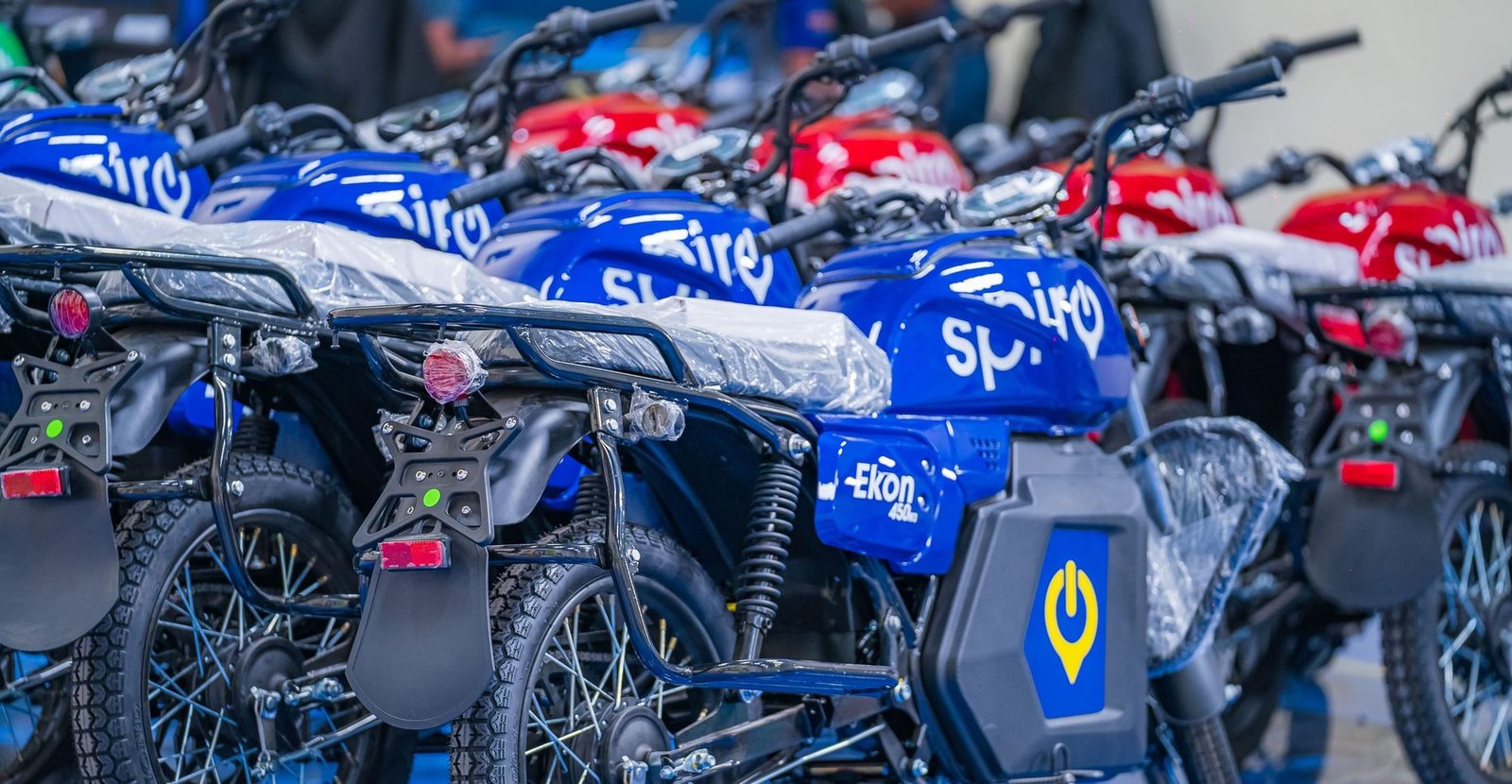
A series of recent announcements illustrates this shift. Europe has strengthened the role of Sustainable Urban Mobility Plans. London is tightening bus safety standards through 2033. Indian cities are using electric buses to reform service delivery. Western Sydney is building electric bus links around a new airport corridor. In Africa, Spiro’s $215 million funding round shows that clean mobility investment is extending beyond buses into electric two-wheelers, battery swapping and local assembly.
Together, these moves suggest a market that is becoming more operationally mature.
Urban Mobility Planning Becomes A Regulatory Requirement
The European Commission has published updated Sustainable Urban Mobility Planning guidelines, aligning them with the European Green Deal, the Sustainable and Smart Mobility Strategy and the EU Urban Mobility Framework. The key market signal is that SUMP is becoming more than a voluntary planning tool. Under the revised TEN-T Regulation, 431 urban nodes across Europe are required to adopt a Sustainable Urban Mobility Plan by the end of 2027.
This matters because it raises the baseline for urban transport governance. Cities will increasingly need to show how public transport, active mobility, logistics, vehicle access regulation, safety and climate goals fit into a coherent mobility strategy. For technology providers, operators and consultants, this creates demand for data, modelling, passenger information, multimodal planning and implementation support.
It also puts pressure on cities to connect policy ambition with deliverable projects. The next phase of urban mobility will be judged less by strategy documents and more by whether cities can translate plans into reliable, inclusive and lower-emission services.
London Pushes Bus Safety Into The Procurement Mainstream
Transport for London has published the second phase of its Bus Safety Standard, setting requirements for buses entering service between 2027 and 2033. The standard covers areas such as driver assistance, passenger protection, cab design, fatigue and distraction monitoring, and wider Vision Zero objectives.
This is significant because safety is being embedded directly into procurement and fleet renewal. London’s approach shows how a large transport authority can use its purchasing power to influence vehicle design and supplier behaviour. The effect is likely to extend beyond the capital, as bus manufacturers and other authorities look to align with higher safety expectations.
The wider market implication is clear: future bus procurement will not be assessed only on emissions, cost and range. Safety technology, driver working conditions and passenger protection will become more central to vehicle specifications.
India’s Electric Bus Rollout Is Becoming A Service Reform Story
India continues to scale electric bus deployment, but the more interesting development is the operating model behind the vehicles. Shillong has begun deploying 55 EKA electric buses under the PM eBus Sewa programme, using a Gross Cost Contract model. Under this approach, operators are paid based on meeting service standards rather than depending directly on farebox revenue.
Bhopal is also preparing to introduce 40 electric buses next month, with routes designed to connect with the metro network. The city is planning 26 new routes in total, while fare reductions have been introduced following changes in operating arrangements.
These examples show that electric bus deployment is increasingly being linked to service quality, network integration and affordability. For smaller and mid-sized cities, the market opportunity is not simply vehicle supply. It includes scheduling, charging infrastructure, fleet management, depot planning, service monitoring and contract design.
This is an important signal for suppliers: cities will look for partners who can help deliver reliable public transport, not just sell buses.
Western Sydney Uses Electric Buses To Shape A Growth Corridor
In Australia, new bus services will connect Western Sydney communities to Western Sydney International Airport from July 2026. The New South Wales Government has announced five permanent routes, supported by 43 new electric buses, with services planned every 30 minutes from 5am to 10pm, seven days a week.
The development highlights the role of electric buses in growth corridors and airport access. Instead of waiting for demand to fully mature, the government is using bus services to connect communities to emerging employment and economic activity around the new airport.
For the market, this shows how electric buses can be deployed as part of broader land-use and economic development strategy. It also underlines the importance of depot electrification, route planning, charging operations and customer amenities in delivering high-quality bus services outside traditional city centres.
Africa’s Clean Mobility Market Moves Beyond The Pilot Stage
One of the strongest investment signals comes from Africa. Spiro has raised $215 million in equity financing to expand its electric mobility and battery-swapping infrastructure. The company operates across Kenya, Rwanda, Uganda, Togo, Benin, Nigeria and Cameroon, and plans to expand into markets including the Democratic Republic of Congo and Ethiopia.
Spiro’s model is important because it focuses on the transport mode that millions of urban residents use every day: two-wheelers. By combining electric motorcycles, battery swapping, local assembly and battery recycling, the company is addressing affordability, range anxiety and fuel cost volatility at the same time.
This points to a broader reality in emerging markets. Clean mobility will not follow a single pathway. In many cities, electrifying informal or semi-formal mobility may have as much impact as electrifying formal bus fleets. Battery swapping, financing, local manufacturing and energy storage could become central parts of the urban mobility ecosystem.
Hydrogen Still Has A Place In The Clean Bus Debate
While battery-electric buses continue to dominate many procurement discussions, hydrogen remains active in selected markets. SamTrans in California has awarded FASTECH and Bosch Rexroth a contract to deliver a hydrogen refuelling station designed to support up to 175 fuel cell electric buses. The facility is planned as a primary refuelling hub, with multiple dispensers and capacity for high daily throughput.
This does not mean hydrogen will replace battery-electric buses. Rather, it shows that some operators are still considering hydrogen for specific duty cycles, depot layouts and operational requirements. The clean bus market is likely to remain technology-diverse, especially where range, refuelling speed or fleet scale make hydrogen attractive.
Market Outlook
The mobility market is becoming less experimental and more execution-focused. The next phase will reward organisations that can combine technology with operational discipline: clean vehicles with reliable service, digital tools with governance, and infrastructure investment with clear use cases.
For cities, the challenge is to turn policy ambition into daily performance. For suppliers and startups, the opportunity is to support that transition with practical, scalable solutions. The strongest mobility businesses will be those that understand public transport not as a collection of assets, but as a service system that has to work every day.
Sources
European Commission: New guidelines to improve EU sustainable urban mobility planning
TfL / SMMT: TfL reveals second phase of Bus Safety Standard
Sustainable Bus: Shillong starts deployment of 55 EKA electric buses
NSW Government: Bus drought for Western Sydney communities to end in July
AP News: Spiro raises $215 million for electric mobility expansion
Electrive: SamTrans orders major hydrogen bus refuelling hub