


Public Transport Market Update: Open Payments, E-Bus Financing and Autonomous Shuttles Are Moving From Pilots to Scale
Public transport is going through another wave of transformation. The focus is now shifting from isolated technology pilots to practical deployment at scale. Cities and operators are investing in solutions that can improve customer experience, reduce emissions, and make public transport more attractive for daily riders and visitors.
Recent developments from Los Angeles, Madrid, West Yorkshire, Spain, Atlanta, Hong Kong and Latin America show how the market is evolving across three key areas: open-loop payments, electric bus deployment, and autonomous first- and last-mile mobility.
Open payments are becoming a priority for public transport agencies
LA Metro has launched contactless credit and debit card payment across Metro and 26 TAP participating agencies. The agency also introduced a new official mobile app with journey planning, service alerts, real-time information and accessibility features.
The timing is important. Los Angeles is preparing for major global events, including FIFA World Cup 2026 and the 2028 Olympic and Paralympic Games. For visitors and occasional riders, the ability to tap a bank card or mobile wallet can remove one of the biggest barriers to using public transport.
Madrid Metro is also moving in the same direction. From 1 June 2026, passengers can use contactless bank cards across 303 metro stations for single journeys. The rollout covers 1,249 ticket gates and is part of a wider digitalisation plan, including account-based ticketing.
This shows that fare payment is no longer just a back-office function. It is becoming part of the customer experience strategy.
Electric bus deployment is becoming a financing and infrastructure business
West Yorkshire Combined Authority has ordered 193 electric buses from Wrightbus for the new Weaver Network. The contract is worth up to £100 million and supports the region’s move toward a publicly controlled bus network.
This is more than a bus procurement. It links fleet electrification with network reform, local manufacturing and better control over fares, routes and timetables.
In Spain, Zenobē and Vectalia have signed a framework agreement worth up to €120 million. The agreement covers electric bus leasing, charging infrastructure, depot electrification, energy management, operations and maintenance, and battery health services.
This is an important market signal. Public transport operators are not only looking for electric buses. They need complete solutions for financing, depot charging, battery risk, energy optimisation and long-term operations.
The next phase of electric bus adoption will be driven by integrated business models, not only vehicle supply.
Autonomous shuttles are finding real public transport use cases
Atlanta has launched ATL Spoke, a free 12-month autonomous shuttle pilot connecting MARTA’s West End Station with the BeltLine Southwest Trail and nearby destinations. The service is designed to provide a first- and last-mile connection and uses ADA-accessible vehicles with onboard attendants.
This is a good example of how autonomous mobility can complement public transport. It is not replacing buses or metro services. Instead, it is being tested in a focused corridor where it can improve access to the existing transit network.
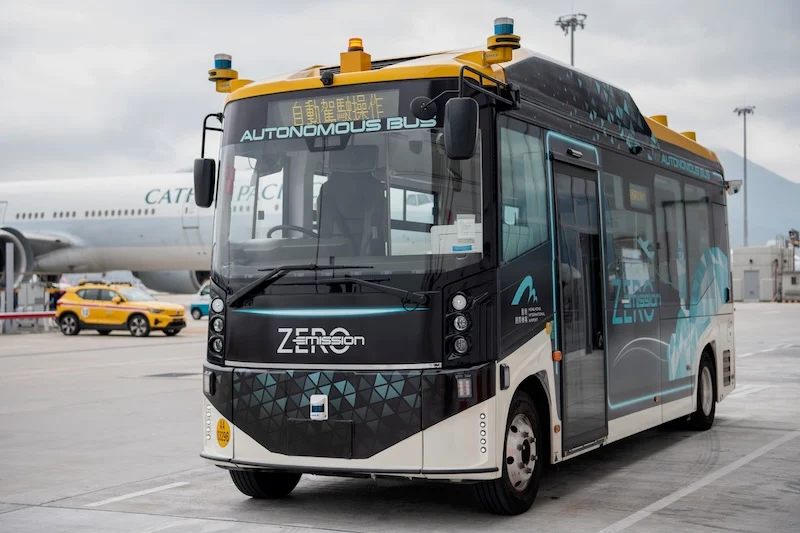
Hong Kong is also advancing autonomous bus deployment. The Transport Department has approved a pilot licence for a 20-seat autonomous bus trial between Sunny Bay and Siu Ho Wan. The project will test autonomous operations in complex road environments and generate data to support future regulatory frameworks.
Autonomous mobility is now moving from concept to controlled public transport applications.
Latin America is showing the scale of electric bus adoption
Latin America and the Caribbean have likely crossed the milestone of 10,000 electric buses in operation. Chile, Colombia and Brazil account for most of the regional fleet, with cities such as Santiago, Bogotá and São Paulo leading deployment.
The region is becoming one of the most important electric bus markets globally. It offers useful lessons on procurement, public-private partnerships, charging infrastructure and large-scale fleet transition.
For bus manufacturers, charging companies, battery analytics firms and fleet-finance providers, Latin America will remain an important growth market.
What does this mean for the mobility sector?
The public transport market is entering a more mature innovation phase. Agencies are looking for technologies that can solve real operational and customer problems.
The key opportunities are emerging in five areas:
- Open-loop and account-based fare payment
- Electric bus leasing and fleet-as-a-service models
- Depot electrification and energy management
- Autonomous first- and last-mile services
- Digital customer platforms for major events and daily travel
The market is moving toward integrated solutions. Public transport agencies do not want disconnected pilots. They need scalable technologies that improve reliability, reduce cost, and make services easier to use.
For mobility innovators, this is a strong signal. The next growth opportunities will come from solutions that can fit into the existing public transport ecosystem and help agencies deliver better service for passengers.
Sources:
LA Metro: https://www.metro.net/about/la-metro-debuts-new-ways-to-plan-pay-for-your-transit-trip/
Madrid Metro: https://www.trenvista.net/en/news/flash/madrid-metro-rolls-out-network-wide-contactless-bank-card-ticketing/
West Yorkshire: https://www.electrive.com/2026/06/01/west-yorkshire-orders-193-electric-buses-from-wrightbus/
Zenobē and Vectalia: https://www.electrive.com/2026/06/04/zenobe-and-vectalia-sign-e120-million-framework-agreement-for-electric-buses/
Atlanta BeltLine: https://beltline.org/blog/atl-spoke-launches-as-atlanta-s-first-autonomous-public-transit-service/
Hong Kong Government: https://www.info.gov.hk/gia/general/202606/05/P2026060400910.htm
Latin America e-bus market: https://www.electrive.com/2026/05/28/latin-america-reaches-10000-electric-buses-in-operation/