


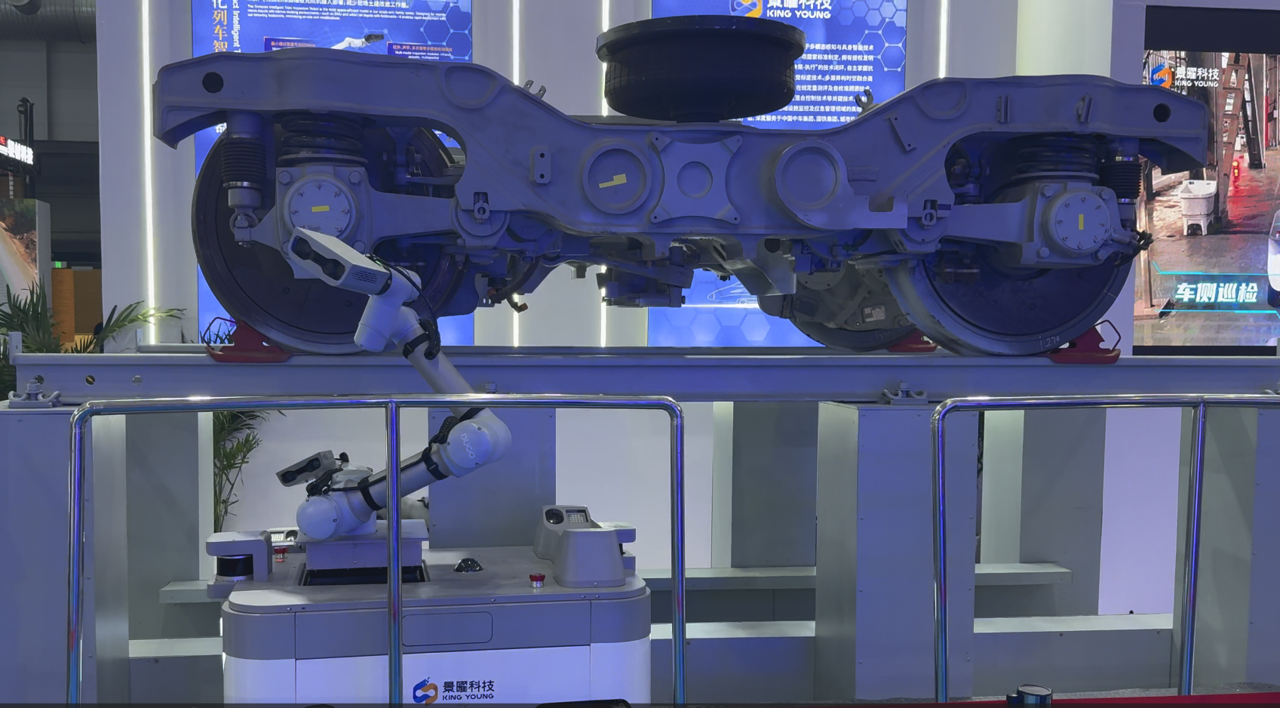
Computer Vision and Artificial Intelligent – Improving Rail Infrastructure
Computer vision and artificial intelligence are helping to change the landscape for wheel and track maintenance. Many agencies are adopting new technologies to automate the inspection and improve predictive maintenance. Here are some key lessons from across regions:
🌏 Asia-Pacific is leading AI adoption in public transport Agencies are actively deploying computer vision and AI-driven tools to enhance operations, safety monitoring, and maintenance efficiency.
👀 China is integrating Large Language Models (LLMs) into rail operations In partnership with open-source models like DeepSeek, agencies have developed solutions such as RailSeek to automate maintenance workflows and transform internal work environments.
🤖 AI avatars are enhancing customer service Transit agencies are using AI-powered virtual assistants to address language barriers and even support sign language communication, improving accessibility and passenger engagement.
⚡ Energy management is becoming both sustainable and profitable In Singapore, LTA, SMRT, and SBS are applying predictive analytics to optimize power systems, escalators, and fleet performance—reducing downtime while improving efficiency.
🌐 Digital twins are no longer optional They are becoming essential tools to manage complex infrastructure projects and enable smarter, data-driven maintenance planning.
💴 Strategic investments in digitalization are accelerating Dubai’s RTA unveiled its AI Strategy 2030, featuring 81 initiatives aimed at embedding AI across mobility and transport services.
🚉 Europe is advancing AI-driven operations Transit agencies are deploying AI for predictive maintenance and scheduling. For example, Madrid Metro has reported significant reductions in rolling stock failures after adopting AI-based scheduling systems.
🚍 North America shows a public-private gap While private operators are rapidly adopting AI solutions, public agencies are gradually expanding use cases such as real-time analytics, predictive maintenance, AI-driven scheduling, and enhanced passenger information systems. Technology will continue to redefine mobility offering and public transport sector will require to play more strategic role rather than passive adopters.
Follow us:
- Twitter: / mobilitysandbox
- Linkedin: / mobilitysandbox
- Instagram: / mobilitysandbox
- Website: https://www.mobility-innovators.com
- Youtube: @mobilityinnovators
Podcast:
- RSS: https://rss.com/podcasts/mobility-innovators/
- Apple: https://podcasts.apple.com/ca/podcast/mobility-innovators-podcast/id1599162375
- Spotify: https://open.spotify.com/show/4qWSLqxpkwaLV4yp0qEvxg